Introduction
You love your pet more than anything, right? That furry friend is a member of the family. So, when you notice bad breath or yellow teeth, it’s natural to worry. You might start searching for solutions, and that’s likely how you stumbled upon Nerovet AI Smart Dentistry. It promises a quick answer. Just snap a photo, and an AI will tell you everything you need to know about your pet’s dental health. It sounds almost too good to be true. In many ways, it is. This article will guide you through what Nerovet AI Smart Dentistry actually does, its real-world accuracy, and the critical things it cannot see. By the end, you’ll have a clear picture of how to best use this tool to protect your pet’s smile.
What Exactly is Nerovet AI Smart Dentistry?
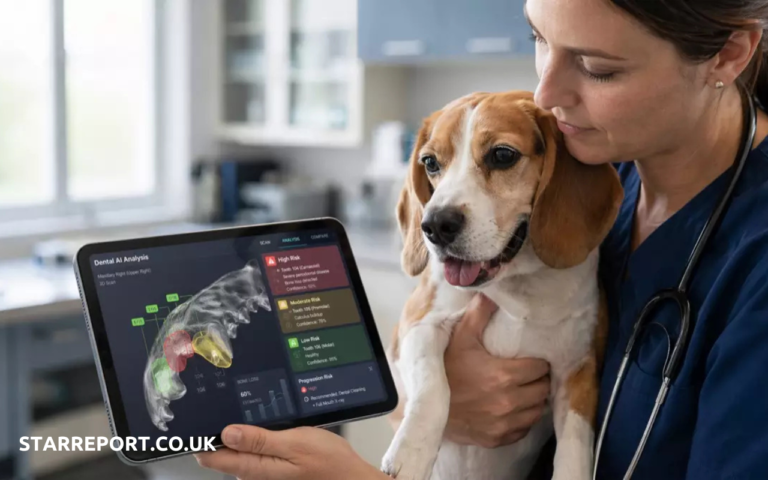
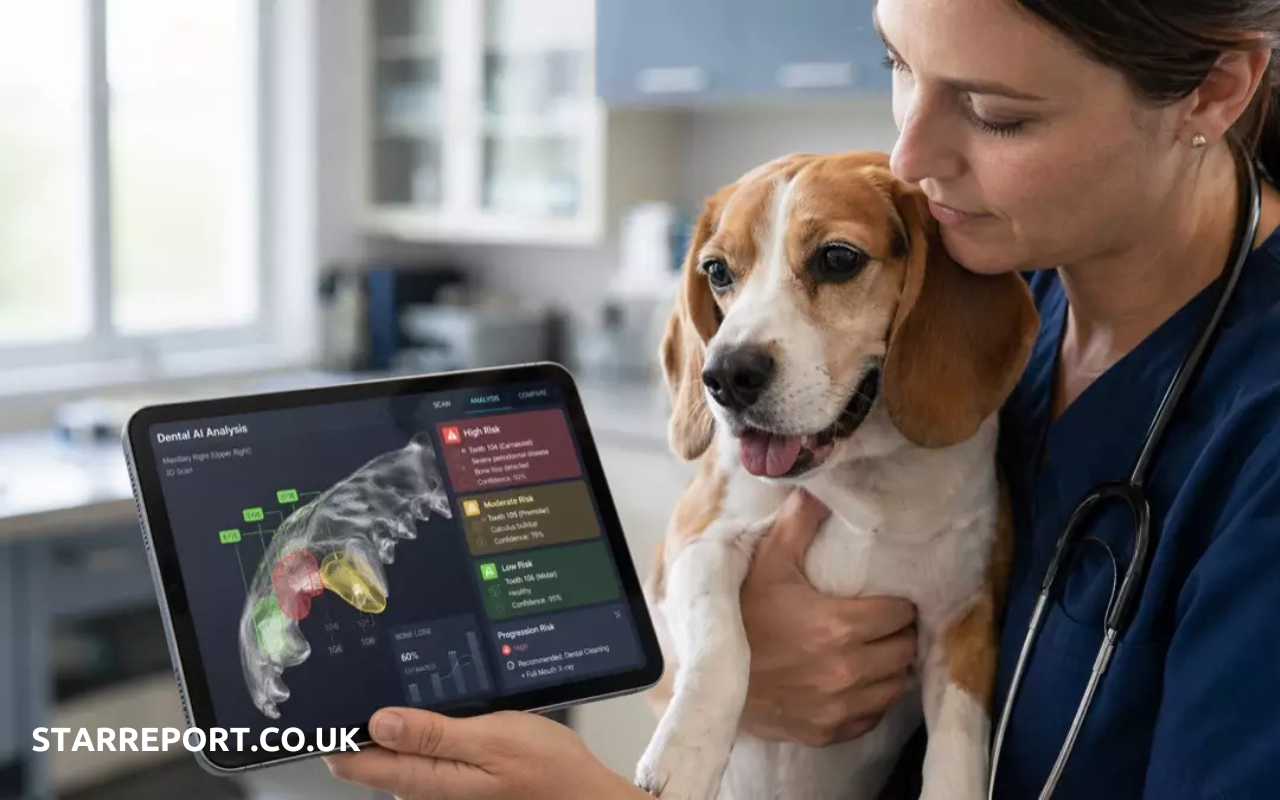
Let’s break down what this technology is all about. Nerovet AI Smart Dentistry is marketed as a way to check your pet’s dental health using artificial intelligence. You take a clear photo of your dog’s or cat’s teeth and gums. You upload that picture to their platform. In return, you receive an AI-generated report analyzing the visible dental issues . The company claims it can detect problems like tartar buildup and gum inflammation. They even boast a “95%+ detection accuracy” .
The appeal is obvious. It’s quick. It’s accessible. You can do it from the comfort of your home. For many pet parents, it feels like a great first step. It might even motivate you to finally book that veterinary check-up you’ve been putting off. The service has reportedly reached over 10,000 pet owners and performed more than 10,000 detections . This shows a real demand for accessible pet health tools.
However, it’s essential to read the fine print. A critical disclaimer is posted prominently: “This detection result is for reference only and does not serve as a medical diagnosis” . This means Nerovet AI Smart Dentistry acts as a screening tool, not a diagnostic one. It’s more like a warning light on your car’s dashboard. It tells you something might be wrong, but it doesn’t tell you exactly what the problem is or how to fix it.
The Reality of Photo-Based Screening: What AI Can and Cannot See
We need to talk about the elephant in the room. Or rather, the disease hiding beneath the gums. This is the most important part of the conversation about Nerovet AI Smart Dentistry. To understand its limits, you have to understand veterinary dental disease.
The “Tip of the Iceberg” Problem
Think of your pet’s tooth like an iceberg. What you see above the gumline is only a small part. A photo can show you visible things: tartar on the crown, red or swollen gums, or obvious fractures . These are significant, and they shouldn’t be ignored.
The real danger, however, lies beneath the surface. The American Veterinary Dental College (AVDC) and other veterinary organizations emphasize that the most painful and serious conditions are hidden below the gumline . Periodontal disease, root problems, tooth resorption, and abscesses are often invisible in a photograph because they are located in the bone and tissue under the gums .
The “95% Accuracy” Claim
You might have seen the claim of “95%+ detection accuracy” on the Nerovet website. But what does that actually mean? This is a crucial question. Without independent verification, a marketing claim is just that: a claim. In medicine, “accuracy” is a complex term. It requires context. You need to know the test’s sensitivity (how well it identifies true cases) and its specificity (how well it avoids false alarms).
The “95%” figure from Nerovet’s marketing materials is a bold statement, but the company has not publicly provided the supporting scientific studies to back it up in a way that can be independently verified . Even in professional veterinary medicine, where AI is used to analyze dental X-rays, validation is a topic of ongoing discussion and research . One study evaluating a commercial AI program for detecting dental pathologies in dogs and cats found a trend of low sensitivity and high specificity . This means the AI was good at not giving false positives, but it often missed actual problems. You need to be aware of this when considering the reliability of photo-based scans.
Professional Veterinary AI: A Different League
It’s important to distinguish between consumer tools like Nerovet AI Smart Dentistry and professional AI systems used in veterinary clinics. They are not the same. For instance, tools like Antech’s RapidRead™ Dental are designed to analyze dental X-rays taken while the patient is under anesthesia . These systems are trained on tens of thousands of actual radiographs and are developed by board-certified veterinary dentists and deep learning engineers .
These clinical AI tools assist vets in real-time. They can automatically number teeth, identify pathologies like periodontal bone loss, and highlight lesions that might be easy to miss . For example, one veterinarian stated that RapidRead “has become a fundamental part of my dental procedures… catching abnormalities I would have missed at first glance” . This is a powerful “second set of eyes” for a busy practitioner. The fundamental difference is that these AI tools analyze X-rays, not photos. They can see the problems hiding below the gumline, which is where the real disease lives .
The Danger of False Reassurance
This brings us to the most significant risk of relying on photo-based screening. There is a danger of false reassurance. Imagine you take a photo, upload it to Nerovet AI Smart Dentistry, and the report comes back looking relatively clean. It shows some tartar but nothing dramatic. You might feel relieved and decide to skip the vet visit.
But what if your pet has a painful root condition that is completely invisible in that photo? The AVDC clearly explains that radiographs are necessary to detect these “beneath the gum-line” problems . By trusting a clean AI report, you could be delaying treatment for a serious issue, causing your pet unnecessary pain. Your pet is a master of hiding pain. Don’t let a photo-based scan give you a false sense of security.
Nerovet AI as a Tool: How to Use It Wisely
So, does this mean Nerovet AI Smart Dentistry is completely useless? Not at all. It can be a valuable tool if used correctly. Think of it as a mirror that shows you what’s visible. It can help you be more aware of your pet’s oral health.
You can use it as a logbook. Take photos over several weeks or months. If you notice changes, like a worsening of tartar or redder gums, that’s a clear sign to book a vet appointment. It can be the nudge you need to take action.
But you must remember that it is not a substitute for a veterinary exam. The official disclaimer is clear: it does not serve as a medical diagnosis . My honest advice is to use it as a conversation starter with your vet. Share the report with them, but don’t base your pet’s entire health plan on it. Only a professional with the right tools can provide a proper diagnosis.
The Solution: Prevention and Professional Care
Ultimately, the best way to protect your pet’s dental health is through a combination of prevention and professional care.
**For prevention, the most effective thing you can do is daily tooth brushing at home. This physically removes plaque before it can harden into tartar . You should also look for dental products with the Veterinary Oral Health Council (VOHC) seal, which proves they are effective at controlling plaque and tartar .
**For professional care, your pet needs a comprehensive dental cleaning under anesthesia. This is the only way to properly examine the entire mouth, clean below the gumline, and take dental X-rays to find hidden problems . It’s the gold standard for a reason.
Conclusion
Nerovet AI Smart Dentistry offers a tempting, quick glimpse into your pet’s mouth, but it’s not a magic bullet. You must be aware of its limits. Its claims of high accuracy require scrutiny. The AI cannot see the disease hiding beneath the gumline, which is where the most serious problems are. This technology can serve as a useful reminder to check your pet’s teeth, but you must not let it lull you into a false sense of security. For a real diagnosis and effective treatment, you must rely on your veterinarian. Their expertise and the tools they use in a professional setting are irreplaceable. So, ask yourself: would you trust a photo to tell you everything about your own health? Likely not. Treat your beloved pet with the same level of care and make that call to your vet today.
Read this to: Lumis Joseph Beyoncé: The Untold Story of the Man Behind a Legendary Name
Frequently Asked Questions
1. Is Nerovet AI Smart Dentistry accurate?
The platform claims “95%+ detection accuracy,” but this is a marketing claim without independent, publicly available verification . The accuracy likely depends heavily on the quality of the photo you upload.
2. Can Nerovet AI replace a vet visit?
No. The tool’s own disclaimer states the results are not a medical diagnosis. You must always consult a professional veterinarian for any health concerns .
3. What can Nerovet AI detect?
It is designed to detect visible issues from a photo, such as tartar buildup on the crown, reddened or swollen gums, and visible swelling .
4. What are the limitations of using a photo for dental screening?
The main limitation is that it cannot see below the gumline. Serious conditions like periodontal disease, root problems, and abscesses are often invisible in a photo .
5. Is there a cost to use Nerovet AI?
While the service is often advertised as free, there are also “Pro” and “Lifetime” plans available with pricing, making the current pricing structure somewhat unclear .
6. What should I do if a Nerovet AI scan shows an issue?
If the AI report flags any concern, you should schedule an appointment with your veterinarian immediately for a proper examination and diagnosis.
7. Is this technology the same as what vets use in clinics?
No. Professional tools like RapidRead Dental are used in clinics to analyze dental X-rays taken under anesthesia, providing a much deeper and more accurate view of a pet’s dental health .
About the Author