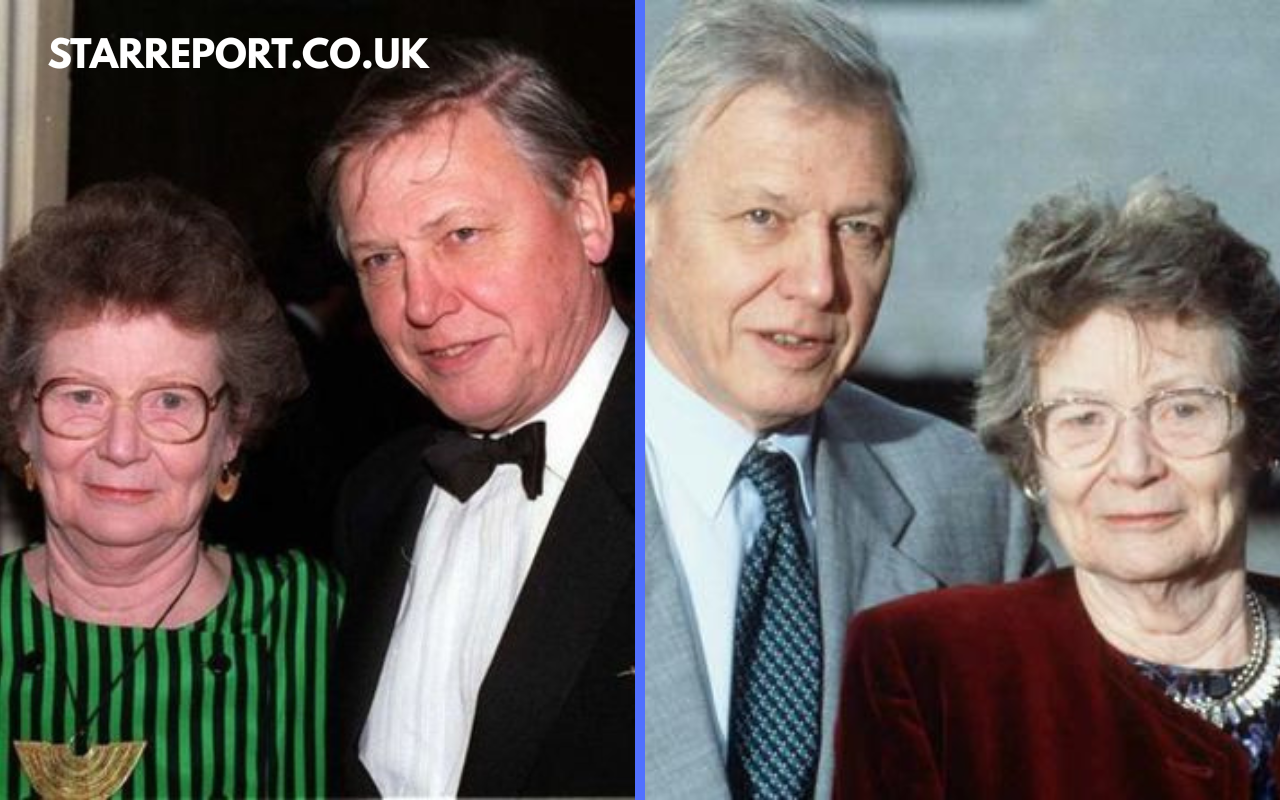
When we think of Sir David Attenborough, we picture a man who has traversed the globe, bringing the wonders of the natural world into our living rooms. His voice is synonymous with nature documentaries, a soothing presence that has educated and inspired generations. Yet, behind every great man is often a great woman, and for nearly half a century, that woman was Jane Elizabeth Ebsworth Oriel. While the world saw a fearless explorer and a masterful television presenter, it was Jane who served as his anchor, his confidante, and the bedrock upon which he built his extraordinary life. This is the story of David Attenborough’s wife, a tale of unwavering support, quiet strength, and a love story that transcended fame and global adventure.
Quick Facts About Jane Elizabeth Ebsworth Oriel
| Attribute | Details |
|---|---|
| Full Name | Jane Elizabeth Ebsworth Oriel |
| Famous As | Wife of Sir David Attenborough |
| Born | July 11, 1926 |
| Birthplace | Merthyr Tydfil, Wales |
| Died | February 16, 1997 |
| Age at Death | 70 |
| Cause of Death | Brain Haemorrhage |
| Spouse | Sir David Attenborough (m. 1950–1997) |
| Children | Robert Attenborough (son), Susan Attenborough (daughter) |
| Grandchildren | 2 |
| Education | Cambridge University |
| Known For | Being the steadfast partner and source of stability for one of the world’s most celebrated naturalists. |
| Net Worth | Not publicly disclosed, lived a private life as a homemaker and supporter of her husband’s career. |
| Social Media | N/A (Pre-digital era) |
A Love Story Begins
The story of David Attenborough and his wife began not amidst the grandeur of a film set or the bustle of a television studio, but in the more ordinary, yet equally profound, setting of their youth. They met as teenagers at university in the late 1940s, a time when the world was recovering from war and brimming with new possibilities . For David, it was love at first sight, and Jane became his first and only serious girlfriend. She was his anchor from the very beginning, a constant in a life that was destined for extraordinary adventure. Their connection was deep and immediate, a meeting of minds and hearts that would define their lives for nearly five decades.
In 1950, at the age of 24, with his national service in the Royal Navy complete, David married his beloved Jane . The ceremony took place at St Anne’s Church on Kew Green, a location that would later hold immense poignancy as the site of their final goodbye . They were young, in love, and ready to build a life together. The decision to marry marked a turning point; Jane was committing not just to a husband, but to a future where his work would frequently take him to the farthest corners of the earth. She was prepared to be the home he always returned to, a role she embraced with grace and quiet strength. Shortly after their wedding, they set up their first home in Richmond Upon Thames in London, a place that would remain their family sanctuary for the rest of their lives together .
A Partnership Forged in Stability and Support
From the very start, the Attenborough marriage was a partnership defined by its stability and devotion. Their relationship was a traditional one in many ways, with Jane choosing to focus on the home and family . As David noted, Jane gave up her own career as a cook when they married, believing wholeheartedly that being a wife and mother was a career in itself . This decision was not one of submission, but of profound love and commitment. She dedicated her life to making their house a home, providing the stable environment that allowed David to pursue his passion for documenting the natural world. She was, in every sense, the personification of unselfishness, a quality her husband would speak of with deep reverence .
The couple’s family grew in the early 1950s, welcoming their son, Robert, in 1951 and their daughter, Susan, in 1954 . While David was away filming, often for months at a time, Jane was the primary caregiver, raising their children and managing the household . This was no small feat, yet she never wavered in her commitment. She was the rock of the family, ensuring that their lives remained stable and loving despite her husband’s frequent absences . David’s career took off; he joined the BBC and became a household name, but through it all, Jane remained his constant, the “focus” of his life and the “anchor” that held him steady . He would often remark that she was a “very special woman” who knew his work made him happy, and she wanted that happiness for him . This unselfish support was the foundation upon which his entire career was built.
David’s work required him to be in some of the most remote and challenging environments on Earth. He braved collapsing glaciers and came face-to-face with stampeding rhinos, yet he always stated that the thought of returning home to Jane was his greatest comfort . Their bond was unique; their time apart did not create distance but instead made their reunions all the more precious. Jane would always meet him at the airport, a beautiful ritual that demonstrated her unwavering support and eagerness to have him home . They were “homebirds” at heart, cherishing their quiet time together, often preferring a simple evening at home over grand social events . Their marriage was a representation of what a partnership should be—a quiet, strong, and enduring love.
Tragedy and an Unbreakable Bond
The beautiful and enduring partnership between David and Jane Attenborough came to a sudden and tragic end in 1997. While Sir David was thousands of miles away filming The Life of the Birds in New Zealand, Jane suffered a catastrophic brain haemorrhage at the age of 70 . The news arrived in a devastating phone call that would turn David’s world upside down. He rushed home immediately, his heart filled with dread and a desperate hope to reach her side. The BBC did everything they could to expedite his journey, allowing him to be by her bedside in a London hospital just hours before her death .
What followed was a heartbreaking final farewell. When he arrived, Jane was in a coma, but in a moment that has since become emblematic of their profound connection, she clasped his hand . Her soul knew her soulmate had returned. “She never recovered consciousness, but she knew I was back because she clasped my hand,” Sir David would later recall . The surgeon compassionately confirmed that there was no way to operate; she was simply not strong enough . Just one day short of their 47th wedding anniversary, Jane passed away, leaving David in a state of profound and utter loss .
The loss was devastating. In his memoir, Life on Air, Sir David wrote with heartbreaking honesty, “The focus of my life, the anchor had gone… now I was lost” . She had not just been his wife; she had been the center of his world, the person who kept his family together and made his success possible. He described being “absolutely distraught” and unsure of how he would adapt to life without her . The quiet strength and unwavering support that she had provided for nearly half a century had been a fundamental part of his existence, and its sudden absence left a void that could never truly be filled. Friends and family who gathered at St Anne’s Church for her funeral remembered Jane as a “lovely girl” with a serene face and the “tremendous capacity to bring people together” . She had been, as many described, the personification of quiet strength.
A Life Dedicated to Family and Home
While David Attenborough’s life was lived on the world stage, Jane Elizabeth Ebsworth Oriel’s was a life dedicated to the home, her family, and quiet personal pursuits. Though often in the background, she was a person of deep substance and character. Her choice to be a homemaker was not a lack of ambition, but a deliberate and loving decision. As Sir David would later explain, “My wife was a very special woman. She gave up her career as a cook when we got married because she was old-fashioned enough to believe that being married and having a family was a career” . She was the personification of grace and humility, creating a warm and welcoming home where David could always retreat from the demands of his public life.
Jane’s life revolved around the family she cherished. She was a superb cook and a wonderful hostess, known for throwing parties that brought together the close-knit community of BBC friends the couple had formed . While she dedicated herself to her family, she also had her own interests, including a passion for pottery and social work . This balance of selflessness and personal fulfillment was a testament to her character. She was the center of gravity for the Attenborough family, a steady and loving presence. Her daughter Susan would later become a headmistress, and her son Robert a senior lecturer in bioanthropology, a testament to the nurturing environment Jane created at home . Her legacy was not one of public acclaim or fame, but of a life well-lived in service to her family, a role she embraced with purpose and love.
A Legacy of Resilience and Remembrance
Sir David Attenborough never remarried after the death of his beloved Jane . Her memory has remained a constant, quiet presence in his life. In the aftermath of his loss, he coped the only way he knew how: by immersing himself in his work . He threw himself into the natural world that had always been his passion, finding solace in the very subject he had dedicated his life to documenting. As he once said, “In moments of grief – deep grief – the only consolation you can find is in the natural world” . This ability to find strength in nature helped him navigate the empty house and the profound loneliness that followed Jane’s death .
Today, the story of David Attenborough’s wife is an integral part of his story. It is a reminder that behind the legendary explorer and broadcaster was a woman of immense love and support, who allowed him to share his passion with the world. Jane’s legacy lives on not only in the hearts of her family but in the very work that made Sir David a global icon. She was the quiet strength behind a powerful voice, and her memory continues to inspire. He continues to live in the same house they shared, surrounded by the memories of their life together . The true depth of his success is inextricably linked to the partnership he shared with his wife, a woman who asked for nothing in return but chose to give everything in love.
Read this to: Alex Tombul: The Nashville Ad Man Who Built a $6 Million Empire Without Ever Posting a Selfie
FAQs About David Attenborough’s Wife
1. Who was David Attenborough’s wife?
David Attenborough’s wife was Jane Elizabeth Ebsworth Oriel. They were married for 47 years until her passing in 1997 .
2. What did David Attenborough’s wife do for a living?
Jane was primarily a homemaker. She chose to give up her career as a cook to focus on her marriage and raising their two children, acting as the backbone of the family .
3. How long were David Attenborough and his wife married?
Sir David and Jane were married for 47 years, from 1950 until her death in 1997 .
4. Did David Attenborough have children with his wife?
Yes, they had two children together: a son named Robert and a daughter named Susan .
5. What was the cause of Jane Attenborough’s death?
Jane passed away in 1997 at the age of 70 after suffering a brain haemorrhage .
6. Did David Attenborough ever remarry after his wife died?
No, Sir David Attenborough never remarried after Jane’s death. He has lived with the memory of his late wife and has often found solace in his work and the natural world .
7. What happened when David Attenborough learned his wife was ill?
He was filming in New Zealand when he received the news of her brain haemorrhage. He flew home immediately and was able to hold her hand before she passed away .
8. Where did David Attenborough and his wife live?
They lived in a family home in Richmond Upon Thames, London, for the entirety of their marriage. Sir David still resides there today .
About the Author