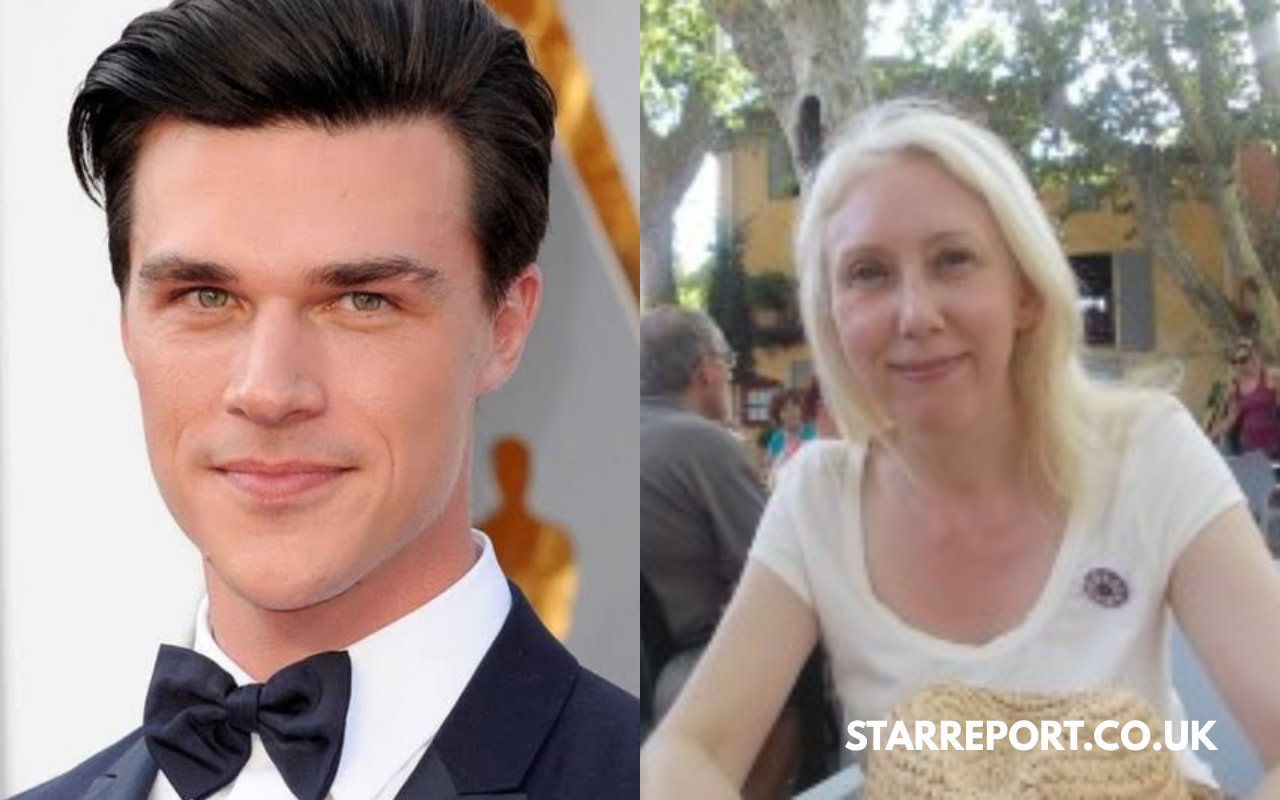
In an era where the lines between the physical and digital worlds are blurring faster than ever, few have navigated this frontier with the quiet tenacity of Finn Sinclair. While many chase fleeting trends in the tech industry, Sinclair has spent his career building the foundational architecture that will define how we interact with computers for decades to come. He isn’t a loud, ego-driven founder; he is a builder, an innovator, and a problem-solver who has consistently operated at the bleeding edge of extended reality (XR), from the earliest days of consumer virtual reality (VR) to the current revolution in spatial computing.
His journey from crafting educational tools to working on some of the most advanced developer platforms is a masterclass in perseverance, adaptability, and technical depth. It’s a story that resonates beyond the tech sphere, offering lessons in resilience for anyone looking to build a career defined by purpose and impact rather than just hype.
Quick Facts
| Aspect | Details |
|---|---|
| Full Name | Finn Sinclair |
| Current Profession | Software Engineer, Extended Reality (XR) Expert, Developer Tools Architect |
| Age | Early 40s (Based on career timeline) |
| Birthplace | Australia (Based on residence and nationality) |
| Current Residence | United States |
| Parents | Information not publicly available |
| Siblings | Information not publicly available |
| Estimated Net Worth | Not publicly disclosed |
| Known For | Contributions to XR, Developer Tools (HoloLens, Windows Phone, Xbox), Open-Source XR Research |
| Not publicly known | |
| linkedin.com/in/finn-sinclair-286462133 | |
| Twitter/X | Not publicly known |
The Formative Years: Laying the Foundation
To understand Finn Sinclair, the technologist, one must first look at the environment that shaped his thinking. Growing up in Australia, Sinclair was immersed in a culture that values resilience, ingenuity, and a “can-do” spirit, often referred to as a “fair go” for everyone. While details about his early life remain private, his career trajectory reveals a man driven by intellectual curiosity from a very young age. This wasn’t a path paved by nepotism or luck, but by a genuine fascination with how things work and, more importantly, how they can be made to work better.
His educational background reflects this deep technical foundation. Sinclair was a researcher at the University of Illinois at Urbana-Champaign, a globally recognized hub for engineering and computer science. This academic setting was where he began to formalize his passion for performance and latency—two concepts that are absolutely critical to creating immersive experiences. It is here that he co-authored the seminal paper on the Illinois Extended Reality testbed, known as ILLIXR .
This work, which won the Best Paper Award at the IEEE International Symposium on Workload Characterization (IISWC) in 2021, was not just an academic exercise . It was a declaration of intent. Sinclair was actively working on democratizing XR systems research. He wasn’t just interested in the glossy end product; he was digging into the engine, the operating system, and the very code that powers virtual worlds. His work on Spatio-Temporal Reprojection and low-power rendering offload (XRgo) provided a clear vision of his future contributions to the industry .
The Professional Odyssey: A 23-Year Stint in the Tech Trenches
Upon graduating, Sinclair threw himself into the deep end of the software industry, embarking on a remarkable 23-year journey with Microsoft. His tenure at the tech giant was anything but ordinary. He worked on a roster of products that reads like a history of modern computing: Xbox, Windows Phone, Media Center, Zune backend, and Windows Live Messenger backend . This diverse portfolio shows his versatility and his capacity to work on systems ranging from consumer entertainment to cloud infrastructure.
However, it was his final decade at Microsoft that defined his legacy. As a “one-man team” in the Mixed Reality division, Sinclair was responsible for the developer tools that would shape the future of holographic computing . He built critical components for the HoloLens, including the Device Portal, Visual Studio integration, the HoloLens Emulator, and Perception Simulation . This meant he was building the very bridge that allowed other developers to create apps. He didn’t just write code; he provided full-stack support, handling planning, development, testing, and customer support .
This experience wasn’t just about technical prowess; it was about vision. Sinclair was working on an operating system for the spatial web before most people had even heard of virtual reality. His work was instrumental in shaping how developers would build for a future where screens are no longer the primary interface with digital information.
Navigating Adversity and Embracing Innovation
One of the most defining moments in Sinclair’s professional life—and a testament to his character—came in 2023 when he was laid off from Microsoft after more than two decades of dedicated service . In an era of corporate restructuring and “right-sizing,” this news was shared publicly by Sinclair himself with a level of candor and vulnerability rarely seen in the tech industry.
In his own words, he had “never a bad review” and had “made it to a reasonably high level.” . This situation could have broken a lesser professional. The tech world is often unkind to those in their 40s, favoring younger, “cheaper” talent. But for Sinclair, this was not an end; it was a beginning.
With the same resilience that characterized his work, Sinclair pivoted immediately. He joined Apple, leaping from one tech titan to another . His expertise in XR and spatial computing was so specific, so rare, and so valuable that he was scooped up to work on what many consider the most significant tech launch of the decade: the Apple Vision Pro. This move solidified Sinclair as one of the preeminent minds in spatial computing, bridging the gap between the early work on HoloLens and the consumer-friendly future heralded by Apple.
Pioneering the Future: Rivet Industries and Beyond
Not content to rest on his laurels, Sinclair expanded his influence even further. He became involved with Rivet Industries, a company that recently emerged from stealth mode . While details about his role at Rivet are largely under wraps, the company’s focus points toward advanced engineering and industrial applications.
This move signals a shift in Sinclair’s career. While he made his bones on developer tools and consumer operating systems, he is now applying his knowledge to tangible, physical problems. Rivet is likely at the forefront of using AR/VR for design, manufacturing, and training, areas where the “killer app” for these technologies has finally started to emerge.
His portfolio is also a testament to his passion for education. He has developed the “VR Museum of Fine Art,” an interactive application that allows students to explore priceless art in virtual reality . He has served as a volunteer teacher for the Juneau Economic Development Council, helping students learn programming and engineering using LEGO robotics . He even designed a DIY 8-bit computer to teach the basics of architecture . This dedication to education shows a man who isn’t just building technology for the sake of it, but for the sake of enriching the human experience.
Personal Life and Public Persona
Unlike many of his Silicon Valley counterparts, Finn Sinclair maintains a remarkably low profile. He is not a celebrity engineer who seeks the limelight. Instead, his reputation is built on the quality of his work and the respect of his peers. He is deeply engaged in the developer community, often sharing insights and collaborating on open-source projects.
This level of privacy extends to his personal life. While details about his family, siblings, or partner are not publicly available, this seems to be a deliberate choice. His focus remains squarely on the work—the architecture, the code, and the user experience. He is a builder first and foremost, embodying the ethos of a true engineer.
His presence on social media is focused and professional. On platforms like LinkedIn, he shares updates on his projects, celebrates the achievements of his colleagues, and offers a window into the high-level work happening at Apple and Rivet . This engagement isn’t performative; it’s a genuine effort to connect with the technical community and share knowledge.
Financial Standing and Influence
Given his seniority and the pivotal roles he has held at Microsoft and Apple, Finn Sinclair’s net worth is likely substantial, though it remains undisclosed to the public. As a lead engineer on multi-billion dollar product lines like HoloLens and XBox, and now at Apple working on the Vision Pro, his compensation packages would have included significant base salaries, bonuses, and stock options.
However, for Sinclair, the value seems to lie less in accumulation of wealth and more in the accumulation of impact. His legacy is the code that helps run the HoloLens, the emulators that allowed developers to create apps, and the open-source research that is pushing the boundaries of what we can do with spatial computing.
A Glimpse at the Data: Active in the Community
It is important to note the existence of another individual named Finn Sinclair, an amateur boxer from Shellharbour, Australia, with a career record of 8 wins and 6 losses . This athlete, however, does not appear to be the same person as the tech professional. The “Finn Sinclair” of the tech world has a residence in the United States and a job at Apple, not an Australian boxing gym, indicating the two are distinct individuals.
This confusion highlights the importance of specific citation and verification, especially when details are sparse. The Finn Sinclair who is revolutionizing the digital realm resides in the world of bits and bytes, not boxing rings.
The Legacy of a Builder
Finn Sinclair’s story is far from over. As he continues his work at Apple, the entire tech world is watching to see what the next generation of mixed reality experiences will look like. His deep understanding of latency, perception, and human-computer interaction will be instrumental in shaping these products.
His decision to venture into the relatively unknown territory of spatial computing—a field that was more hype than substance for years—shows a willingness to take risks. His ability to survive and thrive through corporate layoffs to land on his feet at the top of the industry is a testament to his irreplaceable skill set.
Moreover, his commitment to open-source research and education points to a man who believes in lifting others as he climbs. He is not just creating a successful career for himself; he is paving the way for the next generation of developers, engineers, and dreamers to build the future.
Conclusion
Finn Sinclair represents the unsung heroes of the tech revolution: the builders who turn science fiction into reality. He is a quiet revolutionary in the spatial computing space, demonstrating that true innovation doesn’t always come from loud announcements; it comes from the dedication of countless hours to solving incredibly difficult problems.
As Finn Sinclair continues to pave the way for future generations, his story stands as a reminder of how resilience and purpose can shape a meaningful legacy. He teaches us that it is possible to maintain integrity, depth of knowledge, and a passion for education in an industry often characterized by volatility and superficiality. From the halls of academic research in Illinois to the high-stakes labs of Apple, Sinclair is shaping a world where the lines between our lives and the digital realm are not just blurred but beautifully integrated. His journey is an inspiration to anyone who believes that the only way to predict the future is to build it.
About the Author